Armored jeeps
Many jeeps received added armor in the field, especially in Europe in 1944–1945. Frequently, a rear slanting armor plate was added in front of the grille, and replacing the windshield, as well as the sides, in place of where doors would be. The upper, biggest part was typically made of a single, large, 5/16th inch steel plate, folded in three, with two different sight openings in the front.[citation needed]
Since reconnaissance was one of the jeep’s primary purposes, there was a demand for some armor from the start of production. Starting April 1942, the second T14 GMC 6×6 Willys MT-Tug chassis was converted to the T24 Scout Car. Though performing well in trials, the T24 was abandoned in the autumn in favor of the M8 &
M20 Light Armored Car. Concurrently, the Ordnance Corps was pushed to work on a lightly armored reconnaissance design, based on the standard Willys 4×4 jeep. Different armor configurations were tested on the T25 through T25E3 prototypes respectively.
For all 4×4 armored jeeps, the significant weight increase reduced their payload, and adversely affected their mobility.[citation needed]
Canada created a light, tracked, armored, and armed vehicle using Jeep automotive components. In late 1942, the Canadian Department of National Defence (DND)’s Directorate of Vehicles and Artillery (DVA) began work at No.1 Proving Ground in Ottawa on a small tracked vehicle successively named: ‘Bantam Armoured Tracked Vehicle’, the ‘Light Recce Tank’, and finally: the ‘Tracked Jeep’, TJ.
The Canadian «Tracked Jeep» Mk.1 measured 2.83 m (111 in) long, and 1.70 m (67 in) wide, by 1.28 m (50 in) high; it had a maximum armor of 12mm (
1⁄2
-inch), and aimed at top speeds of 56 km/h (35 mph) on land and 8 km/h (5 mph) in the water.
[92]
The vehicle was intended for taking messages over contested ground,
, and engaging unarmored enemy troops in airborne and combined operations.
[93]
Willys and Marmon-Herrington were contracted for five more prototypes, Willys for power train components, and MH for the armored hulls and the Hotchkiss-type running gear. The Tracked Jeep showed excellent cross-country performance and up-hill mobility was better than other light tracked utility vehicles, while its
capability was adequate, despite its low freeboard.
[93]
There were however serious shortcomings with the running-gear and tracks. Work to fix this delayed testing until late 1944, and British insights demanded such fundamental changes, that a Mk.2 version was developed, of which another six units were fabricated, and not ready until after the war had ended.
[citation needed]
Development start – bantam reconnaissance car
In the early 1930s, the Infantry Board at Fort Benning had become interested in the British Army’s use of the tiny Austin 7 car in a reconnaissance role, and in 1933 obtained a car from the American Austin company in Pennsylvania which built them under license.
Meanwhile, American Austin had gone bankrupt and reorganized as American Bantam. In 1938, they loaned three much improved cars to the Pennsylvania National Guard for trials during summer maneuvers, which were received as reliable, economical and practical.[5] Bantam officials met with chiefs of Infantry and Cavalry and suggested a contract to further develop a military version of their car. But a subcommittee of army officers and civilian engineers was tasked to determine exact specifications for the proposed vehicles, including the now major Robert Howie.
One of their first actions was to visit the Bantam factory, to evaluate their compact cars and production facilities. Once there, Howie stayed several days, and by the end of June 1940, with Bantam’s consultation, the initial specifications were drawn up.[52] They specified a part-time 4-wheel drive vehicle, with a 2-speed transfercase, three bucket-seats, and a folding windshield, of just 1,200 lb (540 kg), with a payload up to 600 lb (270 kg), on a wheelbase no more than 75 in (1.91 m) (the wheelbase of the Bantam Austins), a maximum (collapsible)
height of 36 in (91 cm) (three inches above the Howie-Wiley machine-gun carrier), and a speed range of 3–50 miles per hour (4.8–80.5 km/h). Its body design was to be rectangular, including a sketch drawing, handed to the Ordnance Technical Committee.[5]
By now the war was underway in Europe, so the Army’s need was urgent and demanding. Bids were to be received by 22 July, a span of just eleven days. Manufacturers were given 49 days to submit their first prototype and 75 days for completion of 70 test vehicles.
The Army’s Ordnance Technical Committee specifications were equally stringent: the vehicle would be four-wheel drive, have a crew of three on a wheelbase of no more than 75 in (1.91 m), later upped to 80 in (2.03 m), and track no more than 47 in (1.19 m).
The height with a folded down windshield was also upped, to 40 in (1.02 m). The diminutive dimensions were similar in size and weight to Bantam’s compact truck and roadster models.[55] It was now to carry a 660 lb (300 kg) payload, and be powered by an engine capable of 85 lb⋅ft (115 N⋅m) of torque.
Initially, only American Bantam and Willys-Overland entered the competition. Ford joined later.[56] Although Willys was the low bidder, Willys was penalized for requesting more time, and Bantam received the contract, as the only company committing to deliver a pilot model in 49 days and production examples in 75.
Bantam’s chief engineer, Harold Crist, who had previously worked on the first Duesenberg, and been an engineer at Stutz Motor Company of Indianapolis for 18 years,[55][17] drafted freelance Detroit designer Karl Probst to collaborate.
Probst laid out full design drawings for the Bantam prototype, known as the Bantam Reconnaissance Car, or BRC, in just two days, and worked up a cost estimate the next day. Bantam’s bid was submitted, complete with blueprints, on 22 July.[58] Bantam was struggling after bankruptcy trying to sell very small cars licensed from the British Austin Motor Company.
But their design was able to leverage commercial off-the-shelf components as much as possible. Bantam adapted front sheetmetal body-stampings from its car line: the hood, cowl, dashboard, and curvy front fenders. As the Bantam engines only made 22 hp,[59] a Hercules engine was rejected in favor of a 112 cu in (1.8 l)
Continental four-cylinder, making 45 horsepower and 86 lb⋅ft (117 N⋅m) of torque,[60] mated to a Warner Gear transmission. Custom four-wheel drive-train components included the Spicertransfer case to send power to front and back axles, plus the axles were Spicer units for the Studebaker Champion, modified for four-wheel drive use.[61]
Using off-the-shelf automotive parts where possible had partly enabled drawing up the blueprints quickly. By working backward, Probst and Bantam’s draftsmen converted what Crist and a few others had put together into drawings.[17] The hand-built prototype was then completed in Butler, Pennsylvania,[62] and driven to the Army vehicle test center at Camp Holabird, Maryland.
It was delivered on 23 September 1940. The vehicle met all the Army’s criteria except engine torque. The Bantam pilot, initially called the «Blitz Buggy», and later also dubbed «Old Number One»[[citation needed]
By November 1940, Ford and Willys each submitted prototypes to compete with the Bantam in the Army’s trials. The pilot models, the Willys «Quad» and the Ford »Pygmy», were similar to the Bantam, and were joined in testing by Bantam’s entry, now updated into a Mark II called the «BRC 60».[nb 12][nb 13]By then the U.S. armed forces were in such haste, and allies like Britain, France, and USSR were urging to acquire these new «Blitz-Buggies»,[nb 14] that all three cars were declared acceptable and orders for 1,500 units per company were given for field testing and export.
At this time it was acknowledged the original weight limit (which even Bantam could not meet) was unrealistic, and it was raised to 2,160 lb (980 kg). On 22 January 1941, the Quartermaster Corps Technical Committee advised standardization of the jeeps across all manufacturers.
For pre-production runs, each vehicle received revisions and a new name. Bantam’s became the «BRC 40».[nb 11] Production began on 31 March 1941, with a total of 2,605 built up to 6 December — the number ordered was raised because Britain and the USSR already wanted more of them supplied under Lend-Lease.[13][65][54]
The BRC 40 was the lightest and most nimble of the three pre-standardized models, and the Army lauded its good suspension, brakes, and high fuel economy. However, as the company could not meet the Army’s demand for 75 vehicles a day, production contracts were also awarded to Willys and Ford.[18]
After reducing the Quad’s weight by 240 lb (109 kg), through many painstaking detail changes, Willys renamed their vehicle «MA», for «Military» model «A». Some 1,555 MAs were built, most of which went to the Soviet Union under Lend-Lease. Only 27 units are still known to exist.[54]
Ford’s pre-production model went into production as the «GP», with «G» indicating a «Government» contract, and «P» chosen by Ford to designate a car with a wheelbase of 80 in (203 cm).[nb 15] The Ford GP was not only the most numerous (about 4,458) pre-standardised jeeps[54] — it was also the first jeep fielded in some numbers to U.S. Army units.
The Ford’s overall design and quality of construction had advantages over the Bantam and Willys models, but the GP’s engine, an adaptation of their Model N tractor engine, was underpowered and not sufficiently reliable. Ford built fifty units with four-wheel steering, of which four have survived.[54]
Eventually, virtually all of the Bantam- and Willys-built jeeps were provided to Britain and USSR, as well as most of the Ford GPs, leaving under 1,000 GPs for the home troops.[13]
Notes
- ^Quarter-ton (about 225 kg) was the nominal off-road payload rating — the payload supported was much higher.
- ^Although the dashboard caution plate indicated only 60 mph (97 km/h) in 3rd high.[3]
- ^The company owner and founder of Willys-Overland, John North Willys, always pronounced Willys as , like in Bruce Willis, as opposed to «Willy’s» or «Willies».[6]
- ^According to its U.S. Army Ordnance Corps Supply Catalog designation, ‘G-number’, or SNL nr. — a group number for ordering parts, based on a Standard Nomenclature List.
- ^Counting 2,382,311 trucks across the four main payload classes,[9] plus 116,394 tractor trucks (34,295 military, and 82,099 commercially procured), and some of the 224,272 other vehicles, for a total of roughly 2.6 million units.
- ^The others being the bulldozer, the DUKW amphibious truck, 21⁄2‑ton trucks, and the Douglas C-47 Skytrain transport airplane.[14]
- ^Phil Patton was a design journalist, curator, and author. He wrote regularly about automobile design for the New York Times.
- ^(Willys advertising wording)
- ^Davidson was the leading pioneer of armored military vehicles in the U.S. of his time.
- ^Sources differ on this.
- ^ abcNew research into identification of the earliest jeeps suggests Bantam referred to these as the ’41 BRC.[63]
- ^from «Bantam Reconnaissance Car».
- ^ abNew research into identification of the earliest jeeps suggests Bantam actually called these the ’40 BRC (for 1940).[63]
- ^Contemporaneous nickname in 1940/1941 British Empire and Canada.[citation needed]
- ^Ford’s GP designation did not represent «general purpose» – that was a government description.
- ^Although uprating from 1⁄4‑ton to 1⁄2‑ton seems like doubling, the 1⁄4‑ton standard rating is nominal — the real standard jeep rating was 1,200 lb (540 kg) on road, and 800 lb (360 kg) off-road.[citation needed]
- ^Coincidentally, Willys had owned Moline, but sold it long before the war.[104]
- ^«Larry» is Seaman 2/c Lawrence Meyer, the first Seabee to receive the Silver Star at the Battle of Guadalcanal.[117]
- ^Canadian utility vehicle production during the war included some 800,000 (mainly) right-hand driveCanadian Military Pattern light and medium trucks from 1/2 ton upwards – for British and Commonwealth, and Soviet use – but 1⁄4‑ton jeeps.
- ^U.S. report terminology
- ^Including early, pre-production models.
- ^Almost all WC-51/WC-52 Troop & Weapons Carriers
- ^By war’s end, in 1945, in the European theater U.S. forces had close to one motor truck (jeeps included) for every four men — worldwide it had one vehicle per seven American GIs.[131]
- ^In the early 1980s, the Canadian Army took delivery of 195 militarized units of the CJ-7. These were put into service as a stopgap measure between the retirement of the M38A1 and the introduction of the Volkswagen Iltis. They were codified by the Canadian Forces with the Equipment Configuration Code (ECC) Number 121526.[citation needed]
- ^The HMMWV was generally very successful, but a few U.S. military units kept a small number of M151s in reserve for applications where the Humvee was simply too large or too heavy
Post-war
Willys-Overland filed to trademark the «Jeep» name in 1943.[134] From 1945 onwards, Willys marketed its four-wheel drive vehicle to the public with its CJ (Civilian Jeep) versions, making these the world’s first mass-produced 4WD civilian cars.
Even before actual civilian purpose jeeps had been created, the 3 Jan 1944 issue of Life magazine featured a story titled: ‘U.S. Civilians Buy Their First Jeeps’. A mayor from Kansas had bought a Ford GP in Chicago in 1943, and it performed invaluable work on his 2,000 acre farm.
Already in 1942 industrial designer Brooks Stevens came up with an idea on how to make a civilian car called Victory Car on the jeep chassis.[136] It never went into production, but Willys liked the idea and gave Brook Stevens notable design jobs, including the 1946 Willys Jeep Station Wagon, 1947 Willys Jeep Truck, and 1948 Willys-Overland Jeepster, as well as the 1963–1993 Jeep Wagoneer.[137]
In 1948, the U.S. Federal Trade Commission agreed with American Bantam that the idea of creating the Jeep was originated and developed by American Bantam in collaboration with the U.S. Army as well as Ford and Spicer.[138] The commission forbade Willys from claiming, directly or by implication, that it had created or designed the jeep, and allowed it only to claim that it contributed to the development of the vehicle.[96][18] The trademark lawsuit initiated and won by Bantam was a hollow victory:
American Bantam went bankrupt by 1950 and Willys was granted the «Jeep» trademark the same year.[138][139]
The first CJs were essentially the same as the MB, except for such alterations as vacuum-powered windshield wipers, a tailgate (and therefore a side-mounted spare tire), and civilian lighting. Also, the civilian jeeps had amenities like naugahyde seats, chrome trim, and were available in a variety of colors.
In Britain, Rover were also inspired to build their own, very jeep-like vehicle. Their first testing prototype was actually built on the chassis of a war-surplus jeep, on the Welsh farm of then Rover chief engineer Maurice Wilks and by his older brother, managing director Spencer Wilks.
Production of their «Land Rover» started after its presentation model was well received at the first post-war Amsterdam International Auto show or ‘AutoRAI’ in 1948.[17]
Willys-Overland and its successors, Willys Motors and Kaiser Jeep continued to supply the U.S. military, as well as many allied nations with military jeeps through the late 1960s. In 1950, the first post-war military jeep, the M38 (or MC), was launched, based on the 1949 CJ‑3A.
In 1953, it was quickly followed by the M38A1 (or MD), featuring an all-new «round-fendered» body in order to clear the also new, taller, Willys Hurricane engine. This jeep was later developed into the civilian CJ-5 launched in 1955.
Before the CJ-5, Willys offered the public a cheaper alternative with the taller F-head, overhead-valve engine, in the form of the 1953 CJ-3B, simply using a CJ-3A body with a taller hood.
This was quickly turned into the M606 jeep (mostly used for export, through 1968) by equipping it with the available heavy-duty options such as larger tires and springs, and by adding black-out lighting, olive drab paint, and a trailer hitch.
In 1976, after more than two decades, Jeep complemented the CJ-5 with a new CJ model, the CJ-7. Though still a direct evolution of the round-fendered CJ‑5, it had a 10 in (25 cm) longer wheelbase.
And, for the first time, a CJ had doors, as well as an available hardtop. Since then, new evolutions were derived from the CJ-7 – from 1987 onwards as Jeep «Wranglers». Nevertheless, these are considered direct descendants of the WWII jeep.[140] The 2022 Wranglers still have a separate, open-topped body and ladder-frame, solid live axles front and rear, with part-time four-wheel drive, and high and low gearing.
Licenses to produce jeeps, especially for CJ-3Bs, were issued to manufacturers in many different countries, starting almost straight after WWII, with the Willys MB pattern. Some firms, like Mahindra and Mahindra Limited in India, continue to produce them in some form or another to this day.
Chinkara Motors of India produces the Jeepster,[141] with FRP body. The Jeepster can be delivered a diesel engine or the 1.8L Isuzu petrol.[142]
In France, the army used Hotchkiss M201 jeeps – essentially licensed Willys MBs, and in the former Yugoslavia, the arms manufacturer Zastava rebooted their car building branch, making 162 Willys jeeps. In Japan, Mitsubishi’s first jeeps were versions of the CJ-3B, and in 1950 Toyota Motors was given an order by U.S. forces to build a vehicle to Jeep specifications, resulting in Toyota’s BJ and FJ series of utility vehicles, slightly bigger and more powerful jeep-type vehicles.[17] After the CJ-3B, several countries also built the Willys MD / M38A1 under license.
For instance, the Dutch built some 8,000 «NEKAF» jeeps, which remained in service for some 40 years. In Israel, AIL continues building military derivatives of Jeep Wrangler models for the Israeli Security Forces, ongoing since 1991.
The compact military jeep continued to be used in the Korean and Vietnam Wars. In Korea, it was mostly deployed in the form of the MB, as well as the M38 and M38A1 (introduced in 1952 and 1953), its direct descendants.
In Vietnam, the most used jeep was the then newly designed Ford M151, which featured such state-of-the-art technologies as a unibody construction and all-around independent suspension with coil-springs. The M151 jeep remained in U.S. military service into the 1990s, and many other countries still use small, jeep-like vehicles in their militaries.
Apart from the mainstream of — by today’s standards — relatively small jeeps, an even smaller vehicle was developed for the U.S. Marine Corps, suitable for helicopter airlifting and manhandling, the M422 »Mighty Mite».
[check quotation syntax]
Eventually, the U.S. military decided on a fundamentally different concept, choosing a much larger vehicle that not only took over the role of the jeep, but also replaced all its other light wheeled vehicles: the HMMWV («Humvee»).[nb 25]
In 1991, the Willys-Overland Jeep MB was designated an International Historic Mechanical Engineering Landmark by the American Society of Mechanical Engineers.
References
- ^Willys Jeep – Autozine.org
- ^ abcTM9-803 (1944) pp 10–14
- ^U.S. Ordnance Standard Nomenclature List – G-503 (Willys MB / Ford GPW). War Department. pp. 11–15 – via Internet Archive.
- ^ abcL. VanLoan Naisawald, ed. (January–February 1978). «20 Years to Develop–The Jeep». Army Research and Development Magazine. Vol. 19, no. 1. Development & Engineering Directorate of U.S. Army Materiel Development & Readiness Command (DARCOM). p. 15. Archived from the original on 27 February 2022. Retrieved 27 February 2022.
- ^«J.N. Willys pronounced his name ’Willis,’ local Jeep historian says». Toledo Blade. The Blade. 2 February 2002. Retrieved 10 July 2021.
“I talked to many people, now deceased, including his private secretary, and all said emphatically that he pronounced it `Willis,’ said Ron Szymanski, local Jeep historian. “I can attest to the fact that Willys’ relatives all say `Willis.’”
- ^TM 9-2800 – Standard Military Motor Vehicles. U.S. War Department. 1 September 1943. pp. 136–137.
- ^ ab«Vehicle Profiles: Jeep Willys». The ClassicCars.com Journal. 2 July 2008. Retrieved 8 November 2022.
- ^ abcHyde, Charles K. (2022). Arsenal of Democracy; The American Automobile Industry in World War II (Ebook ed.). Detroit: Wayne State University Press. p. 152. ISBN 9780814339510. Retrieved 28 December 2022.
- ^ abcdeU.S. Ordnance Corps (31 December 1946). «III-B «Ordnance – Motor Transport Vehicles», Part I». Quantities of Lend-Lease Shipments(PDF) (Report). U.S. War Department. p. 1. Archived(PDF) from the original on 31 December 2022. Retrieved 17 February 2021.
- ^Elphick, James (5 May 2022). «7 Tools that Helped America win WW II». wearethemighty.com. Retrieved 24 June 2022.
- ^ abcdWarfare History Network (21 August 2022). «Why America’s Best World War II ’Weapon’ Isn’t What You Think It Is». The National Interest. Washington, D.C.: Center for the National Interest. p. 1. Retrieved 10 July 2021.
- ^Eisenhower, Dwight D. (1948). Crusade in Europe. Doubleday (US) / Heinemann. pp. 163–164. ISBN 9780801856686. OCLC 394251.
- ^ abcdFoster, Patrick R. (2022). Jeep: The History of America’s Greatest Vehicle. Motorbooks International. pp. 11–13. ISBN 9780760345856. Retrieved 30 January 2022.
- ^ abcd«The Jeep: An American Icon». National Museum of the United States Army. 16 July 2022. Retrieved 27 January 2022.
- ^ abcdefghiBennett, Ralph Kinney (9 April 2022). «The Elegant Jeep». American Enterprise Institute. Retrieved 10 January 2021.
- ^ abcPulos, Arthur J. (1988). The American Design Adventure, 1940–1975. MIT Press. p. 20. ISBN 9780262161060. Retrieved 26 May 2022 – via archive.org.
- ^Ackerson (2006) pages=7–8 «…several military officers who regarded the Jeep as «a universal idea, which no one person invented, created or discovered … an evolution not an invention … the fruit of specifications defined by the military over a long period.»
- ^ abPatton, Phil (23 April 2022). «Design by Committee: the Case of the Jeep». Phil Patton blog. Retrieved 27 January 2022.[nb 7]
- ^ abcdHogan, Lt. E.P. (1941). «The Story of the Quarter-Ton, The Army’s Smallest Car Known as a »Jeep»«(PDF). The Quartermaster Review. Vol. XXI, no. 2. Washington D.C.: The Quartermaster Association. pp. 53–54, 82–84. Retrieved 22 February 2022.
- ^«FTC Says Bantam Company, Not Willys-Overland Conceived it». New York Times. 9 May 1943. Archived from the original on 4 March 2021. Retrieved 28 February 2022.
Newspaper clipping
- ^«75th Anniversary of the Original Jeep Patent». 7 April 2022.
- ^ ab«Patent 2,278,450: Military Vehicle Body». Retrieved 30 January 2022.
- ^ abcdeAaron Cortez (4 August 2022). «History of Military Motorcycles». Spring Valley, CA: BikeBandit. Retrieved 4 July 2021.
- ^P. Findlay (2006). Man and Jeep(documentary); time = 3:45–4:18
- ^P. Findlay (2006). Man and Jeep(documentary); time = 4:00–4:34
- ^ abcd«Truck Makers Supply Both Men and Cars for Army»(PDF). The New York Times. 19 March 1916. Retrieved 1 July 2021.
- ^«Army Officers Try Alaska Auto Run»(PDF). The New York Times. 18 January 1914. Retrieved 1 July 2021.
- ^ abcdSix WWI Vehicles That Helped Create Our Modern Mechanical World – Haynes Manuals
- ^PBS, 2007: Jeep: Steel Soldier. Time = 2:02–2:40
- ^Allen, Jim (7 December 2022). «1943 Dodge WC-51 Weapons Carrier, Power & Glory: Backward Glances». FourWheeler.com. Extreme Ventures, LLC. Retrieved 24 February 2022.<span class="Z3988" title="ctx_ver=Z39.88-2004&rft_val_fmt=info:ofi/fmt:kev:mtx:journal&rft.genre=unknown&rft.jtitle=FourWheeler.com&rft.atitle=1943 Dodge WC-51 Weapons Carrier, Power & Glory: Backward Glances&rft.date=2022-12-07&rft.aulast=Allen&rft.aufirst=Jim&rft_id=http://www.fourwheeler.com/features/1612-1943-dodge-wc-51-weapons-carrier-power-and-glory-backward-glances/&rfr_id=info:sid/en.wikipedia.org:Willys MB»>
- ^Senefsky, Bill (31 July 2007). «1916 To 1975 Dodge Diesel Engines – Dodge’s First Diesels». Truck Trend. Retrieved 2 October 2022.
- ^ abPBS, 2007: Jeep: Steel Soldier. Time = 2:40–3:00
- ^Crismon, Fred (1983). «U.S. Military Wheeled Vehicles». via WarWheels.net. Crestline. Retrieved 2 October 2020.
- ^ abFisher, Lindsey (11 August 2022). «Vintage Monday: Marmon-Herrington Trucks; The Jeep’s Grandfather». Off Road Xtreme. Retrieved 2 October 2022.
- ^ abFoster, Patrick R. (15 July 2022). Jeep: The History of America’s Greatest Vehicle. Minneapolis, MN: Motorbooks. pp. 22–23. ISBN 9780760345856. Retrieved 27 January 2022.
- ^PBS, 2007: Jeep: Steel Soldier.Jim Allen (4×4 writer) from 3:18–3:35
- ^«The History of Jeep». links4jeeps. 24 February 2007. Archived from the original on 17 July 2022. Retrieved 26 May 2022.
- ^«Jeep 1941 – 2001». difflock.com. Archived from the original on 15 April 2022. Retrieved 26 May 2022.
- ^PBS, 2007: Jeep: Steel Soldier. Bantam Austin mini truck, like in Popular Mechanics, is shown at 4:00 min.
- ^««Baby» Truck Aids Army Scouts and Raiders». Popular Mechanics. Vol. 60, no. 5. November 1933. ISSN 0032-4558. Archived from the original on 11 May 2022. Retrieved 12 May 2022.
- ^ abcdeBlackburn, Marc K. (1996). The United States Army and the Motor Truck: ‘A Case Study in Standardization’. Contributions in Military Studies Number 163. Westport, CT: Greenwood Publishing Group. pp. 98–99. ISBN 9780313298080. ISSN 0883-6884.
- ^Fowler, Will (1993). Jeep Goes to War – a pictorial chronicle. Courage Books. ISBN 9781561382354.
- ^Johnson, Wendell G. (November 1937). «The Howie Machine-Gun Carrier»(PDF). Infantry Journal. U.S. Army (6: Nov–Dec): 529–531. Archived(PDF) from the original on 2 February 2022 – via Willys-Overland.com.
- ^Doyle, David (2022). Chevrolet G-506 – 1 1/2-ton 4×4 Development, Production and Variants in WW2. Branchville, NJ: Portrayal Press. p. 8. ISBN 9780938242062. Archived from the original on 8 April 2022.
- ^Allen, Jim (2004). Jeep Collector’s Library. MotorBooks International. pp. 14–15. ISBN 978-1-61-059054-9. Retrieved 26 February 2022.
- ^ abcdef«Jeeps in Olive Drab». MotorTrend. 1 October 1999.
- ^ abRedgap, Curtis. «Austin, Bantam, and Willys: Birth of the Jeep». Allpar Forums. Retrieved 10 January 2021.
- ^Borth, Christy (1945). Masters of Mass Production. p. 220. Retrieved 26 May 2022.
- ^«Jeep History Through The Years». Everyman Driver. 8 April 2022. Archived from the original on 12 November 2022. Retrieved 10 January 2021.
- ^«The Military Jeep». Cossor.com.au. Archived from the original on 29 May 2022. Retrieved 12 March 2022.
- ^content by Consumer Guide Automotive (17 July 2007). Damon Bell (ed.). «1938–1941 American Bantam». HowStuffWorks.com. Archived from the original on 24 September 2020. Retrieved 10 January 2021.
- ^ abAllen, Jim (10 January 2022). «Origins Of The Jeep: Birthing A 75-Year Legend». FourWheeler.com. Retrieved 22 February 2022.
- ^content by Consumer Guide Automotive (13 December 2007). Damon Bell (ed.). «1906–1939 Jeep». HowStuffWorks. Archived from the original on 12 January 2021. Retrieved 10 January 2021.
- ^«Invention of the Jeep – Pennsylvania Historical Markers». Waymarking.com. 9 March 2006. Retrieved 23 February 2022.
- ^ abSmith, Stephen H. (7 December 2022). «Earliest Jeeps Built 75-Years Ago for WWII». York Daily Record. Retrieved 27 January 2022.
- ^Allen, Jim (2003). Jeep. Motorbooks International. p. 28. ISBN 9780760314869. Retrieved 26 May 2022.
- ^ abStearns, David M. (October 1941). «Leaping Lena Joins the Army». Popular Science. Vol. 139, no. 4. pp. 52–58. ISSN 0161-7370. Archived from the original on 14 May 2022. Retrieved 14 May 2022.
- ^Georgano, Nick (2000). Beaulieu Encyclopedia of the Automobile. London: HMSO. ISBN 1-57958-293-1.
- ^The Jimmy’s Ancestry; The CCKW in Detail and The Collector’s Syndrome — Bryce Sunderlin in Army Motors #47, p.19 (MVPA)
- ^ abEilers, David. «Exploring the World in a Ford GPA SEEP». warjeeps.com.
- ^«Arc Welder Kit for G503. Installation manual for MB/GPW. 20 pages». www.portrayalpress.com.
- ^ ab2020/2021 Military Trader article by David Doyle (writer)
- ^WWII Surgeon Develops Light Field Ambulance, André B. Sobocinski, BUMED Historian, 19 February 2022 in Navy Medicine Live (Archived)
- ^Jackson, David D. «Crosley – American Automobile Industry in World War Two». Retrieved 1 May 2022.
- ^«More on the Crosley »Pup» Jeep». eWillys. 1 January 2022. Retrieved 1 May 2022.
- ^«SHOP TALK: Three Jeeps». The National WWII Museum | New Orleans.
- ^ abVanderveen, Bart, ed. (1992). «Willys MT-TUG – 6×6 Super-Jeep». Wheels & Tracks. Old Harlow, Essex, UK: After The Battle publication. pp. 25–33. Archived from the original on 17 September 2020. Retrieved 24 September 2020.Full article at 12.08.2022 02:34:41
- ^ ab«Army Jeep Parts for Sale Online | Vintage Jeep Parts».[failed verification]
- ^«Unique Jeeps – The Good, The Bad & The Goofy». MotorTrend. 14 May 2022.
- ^«Willys-Overland Motors in WWII». usautoindustryworldwartwo.com.
- ^«Willys Jeep, Ford jeep». www.milweb.net.
- ^ ab‘Jeep modifications (continued)’ (in Dutch)
- ^Askew, Mark (2008). «The History of the Willys Half-Track Jeeps- the T-29 and T-29 E1». www.milweb.net. Retrieved 24 July 2021.
- ^ ab«Reconnaissance Carrier – Canadian War Museum». Archived from the original on 9 February 2021. Retrieved 9 February 2021.
- ^ ab«Canadian Tracked Jeep (Willys)». 16 August 2022.
- ^Doyle, David (2022). Standard Catalog of U.S. Military Vehicles – 2nd Edition. Iola, Wisconsin: Krause Publications. p. 85. ISBN 9781440225727.
- ^ abWare, Pat (2022). Military Jeep Manual: An insight into the history, development, production and role of the US Army’s light four-wheel-drive. Haynes. p. 39. ISBN 9781844259335.
- ^Wilton, Dave (12 July 2006). «Jeep». Wordorigins.org. Archived from the original on 28 March 2022. Retrieved 27 January 2022.
- ^Borth, Christy (1945). Masters of Mass Production. Indianapolis, IN: Bobbs-Merrill. pp. 208–236.
- ^ abcd«Will The Real Jeep Please Stand Up». www.offroaders.com.
- ^Massey, Ken; Zatz, David (16 November 2020). «How the Jeep got its name instead of Peep, Beep, or Seep». Allpar.com. Archived from the original on 28 February 2022. Retrieved 1 March 2022.
- ^The Industrial Jeep – 1943 NTX – Minneapolis-Moline’s – Hemmings Motor News
- ^ abcMorr, Tom; Brubaker, Ken (2007). Jeep Off-Road. MotorBooks International. p. 11. ISBN 9781610590563. Retrieved 27 January 2022.
- ^ abcdeMassey, Ken; Zatz, David. «How the Jeep got its name». allpar.com. Retrieved 27 January 2022.
- ^«Definition of jeep carrier | Dictionary.com». www.dictionary.com.
- ^Bryan, B.J. (19 March 2022). The Ship That Never Was. Xlibris Corporation. p. 131. ISBN 9781456877682. Retrieved 20 February 2022.
- ^ abBrown, Arch (2001). Jeep: The Unstoppable Legend. Publications International. p. 42. ISBN 978-0-7853-5562-5.
- ^«Jeeps & Canada – www.captainstevens.com».
- ^«Jeep or Peep? Army Editors Can’t Decide». Sarasota Herald-Tribune. United Press. 16 April 1942. p. 11. Retrieved 1 March 2022.See article
- ^«The Official name for the Jeep — Peep? Bantam Car? Other?». eWillys. 28 January 2022. Archived from the original on 18 November 2020. Retrieved 2 March 2022.
- ^«When a ’Jeep’ is a ’Peep’«. Milwaukee Journal. 22 April 1942. Archived from the original on 18 November 2020. Retrieved 2 March 2022.
- ^«Jeep—Peep». The Pittsburgh Press. 24 May 1942. p. 18. Archived from the original on 2 March 2022. Retrieved 2 March 2022.
- ^Chief of Ordnance Office; Military Vehicle Preservation Association, eds. (2022). Summary Report of Acceptances, Tank-Automotive Materiel, 1940–1945 (Revision). Detroit: U.S. Army Service Forces, Office: Chief of Ordnance-Detroit, Production Division, Requirements and Progress Branch (published December 1945). pages XXV and 55–58.
- ^Summary Report – Tank-Automotive Materiel (1945), p. XXV and 54.
- ^ abDickson, Paul (1 August 2022). War Slang: American Fighting Words & Phrases Since the Civil War, Third Edition. Courier Corporation. p. 178. ISBN 9780486797168.
…from an article by Marsh Maslin in the San Francisco Call-Bulletin of November 22, 1941: ‘Do you know why those swift little army cars are called ‘jeeps’? It’s Model G-P produced by that automobile manufacturer — and G-P easily becomes ‘jeep’.’
- ^«Archived copy». Archived from the original on 22 April 2022. Retrieved 22 April 2022.
{{cite web}}: CS1 maint: archived copy as title (link) - ^Cowdery, Ray. «How the Jeep got its name…»Charlie Company Vietnam 1966–1972. 2 March 2022. Retrieved 12 May 2022.
- ^Joseph Krumgold, Irving Lerner (directors); Joseph Krumgold (writer) (1943). The Autobiography of a ‘Jeep’(4:3) (film). 9:42 min: Office of War Information. Event occurs at 3:15 min. Archived from the original on 16 May 2003. Retrieved 12 October 2020.
.., because they [the U.S. Army] gave me a nickname. From the words ‘General Purpose’, they took the ‘G’ and the ‘P’. They called me «Jeep» !
{{cite AV media}}: CS1 maint: location (link) - ^«Origin of the Term Jeep». olive-drab.com. Retrieved 20 February 2022.
- ^Franklin D. Roosevelt (April 1942). The »peep» (not a jeep this time) has a vital role to play in defense of America’s shores at Fort Story, VA(U.S. National Archives record) (photograph). Franklin D. Roosevelt Library Public Domain Photographs, 1882 — 1962]. Vol. FDR Photographs, 1882–1962. ARC Id 196278; NAIL nr. NLR-PHOCO-A-65602(15). Retrieved 4 March 2022.
- ^«How Americans got to meet the Jeep in 1942». Automotive News. 15 July 2022.
- ^«Why it’s a ’Jeep’ and not a ’Leaping Lena’«. Automotive News. 8 July 2022.
- ^Vellequette, Larry P.; News, Automotive (14 July 2022). «Why it’s a ’Jeep’ and not a ’Leaping Lena’«. Autoweek.
- ^ abTorchinsky, Jason (20 February 2022). «The Iconic Face Of The Jeep Was Actually Designed By Ford». Jalopnik. Retrieved 27 January 2022.
- ^«Lend-Lease tanks and aircrafts [sic]». WW2 Weapons. 23 February 2021.
- ^Beckett, Jack (5 March 2022). «WWII Jeep in a Crate for $50 – fact or a tall story».
- ^ abStubblebine, David. «Jeep». WW2DB.
- ^Taylor, Peter Shawn (19 April 2022). «The Trucks that Beat Hitler». National Post. Postmedia Network. Retrieved 9 May 2022.
- ^Moran, Nicholas (24 February 2022). «The Chieftain’s Hatch: ETO Equipment Reviews, Pt 2». The Chieftain’s Hatch. Wargaming. Retrieved 26 November 2021.
- ^Hull, Michael D. (19 October 2022). «The Magnificent Jeep». Warfare History Network.
- ^«JEEP Trademark of WILLYS-OVERLAND MOTORS, INC. – Registration Number 0526175 – Serial Number 71458520». Justia Trademarks. Retrieved 28 January 2022.
- ^Stevens, Brooks (2022) [1942]. «Your Victory Car». Modern Mechanix. pp. 82–85, 162. Retrieved 31 January 2021.
- ^Carlsson, Mårten (15 October 2022). «Stevens segerbil». Klassiker. Retrieved 15 October 2022.
- ^ abLinkhorn, Tyrel (7 August 2022). «Original Jeep designed by many minds». The Blade. Toledo, Ohio. Retrieved 28 January 2022.
- ^Zubritzky, Peter C. (Winter 2003–2004). «Pittsburgh, the steel and (once) motor city». Western Pennsylvania History. Retrieved 28 January 2022.
- ^Bell, Kirk (11 June 2022). «How the military jeep became today’s Jeep Wrangler». Motor Authority. Retrieved 1 February 2021.
The Jeep Wrangler has […] its ancestry back to its lowercase-«jeep» forefathers, […] back to before America entered World War II, […] that share its uncomplicated, irreplaceable DNA.
- ^«Chinkara Jeepster photo».
- ^«Welcome to Chinkara Motors».
- ^Mead, Sue (14 June 2005). «First Look: 2005 Jeep TJ Willys – Truck Trend». Motor Trend. Retrieved 13 July 2022.
Service
The USA provided jeeps to almost all of the Allies in World War II. Britain, Canada,[nb 19] Australia, India, the Free French, USSR and China all received jeeps, mostly under the American Lend-Lease program.[16] Some 182,500 units were provided to Allies under Lend-Lease alone.
Almost 105,000 to the British Empire,[nb 20] including Australia and India, plus over 8,000 to Canada, and some 50,000 to the Soviet Union.[11] The Free French (almost 10,000)
and China (almost 7,000) were medium takers, and many other countries received a small number.[11] America shipped a total of 77,972 various «jeeps» to the Soviet Union – consisting of 49,250
1⁄4
‑tons,
[nb 21]
25,200
[nb 22]
and 3,520
[126][11][72]
In the deserts of the North African campaign, the jeep’s abilities so far surpassed those of British vehicles that it wasn’t unusual for jeeps to rescue a three-ton truck stuck in the sand. In combat, the British would use their jeeps in groups of up to fifty or sixty to raid Rommel’s supply lines by surprise, exploiting the jeep’s low silhouette; able to remain unseen, hide behind dunes, and surprise the enemy.
Within the U.S. military, jeeps were used by every branch. In the U.S. Army, an average of 145 units were assigned to each infantry regiment.[128] Around the world, jeeps served in every overseas theater of operation, in every environment, under all weather and climatic conditions — in North Africa and the Pacific Theater, the Western Allied invasion of Europe in 1944, as well as the Eastern Front.
From deserts to mountains, from jungles to beachheads, jeeps could be pulled out of thick mud by their riders, and they were even flown into battle on light glider planes.[13] In the European theater, they were so ubiquitous that some German troops believed that each American soldier was issued their own jeep.[129][nb 23]
Jeeps served as indefatigable pack horses for troop transport and towing supply trailers, carrying water, fuel, and ammunition, and pulling through the most difficult terrain. They performed nimble scout and reconnaissance duty, were frequent ambulances for the wounded, and did hearse service.
They also doubled as mobile field command headquarters or weapons platforms – either with mounted machine guns or pulling small artillery pieces into «unreachable» areas over inhospitable terrain.[17] The Jeep’s flat hood was used as a commander’s map table, a chaplain’s field altar, the G.I.s’ poker table, or even for field surgery.
In the cauldron of war, the jeeps served every purpose imaginable: as a power plant, light source, improvised stove for field rations, or a hot water source for shaving. Equipped with the proper tools, it would plow snow, or dig long furrows for laying heavy electrical cable along jungle airfields – laid by another jeep following it.[17]
Battle-hardened warriors learned to weld a roof-top height vertical cutter-bar to the front of their jeeps, to cut any trip wires tied across roads or trails by the Germans, placed to snap the necks of unsuspecting jeepers.[15] Fitted with flanged steel wheels, they could pull railroad cars.[15][16][17] In Europe, «The service of this vehicle was excellent, considering all the abuse it was obliged to take from bad roads, high speeds, overloading, and lack of maintenance.
It performed tasks that it was never intended to perform, from carrying ammunition to locations where other wheeled vehicles could not travel, to serving as a cross-country ambulance traversing roads and country considered practically impassible.»[132]Pulitzer Prize–winning war journalist Ernie Pyle wrote:
«It does everything. It goes everywhere. It’s as faithful as a dog, as strong as a mule and as agile as a goat. It constantly carries twice what it was designed for, and still keeps on going.»[9]
Despite some shortcomings, the jeep was generally well-liked, seen as versatile, maneuverable, reliable, and almost indestructible.[16] The seats were found uncomfortable, sometimes caused the so-called «Jeep riders’ disease» and cramped in the rear, but many soldiers enjoyed driving the nimble jeep, appreciating its powerful engine; and with its light weight, low-cut body sides, bucket seats and manual floor-shifter, it was as close to a sportscar as most GIs had ever driven.[15]Enzo Ferrari called the Jeep «America’s only real sports car.»[129] Nazi generals admired the jeep more than any other U.S. materiel, and it was the vehicle the most liked to capture for general use.[133]
Американские джипы в советском ленд-лизе
Стоит отметить, что прогрессивные на тот момент Willys MB были далеко не первыми джипами, которые поставляли в СССР. Американцы начали с поставок уже порядком устаревшей и не очень удачной техники: Bantam BRC-40, Ford GP и Willys MA. Подобным образом строилась работа, скажем, с Китаем, Бразилией, Южной Африкой и Филиппинами, куда США также отправляли свои машины.
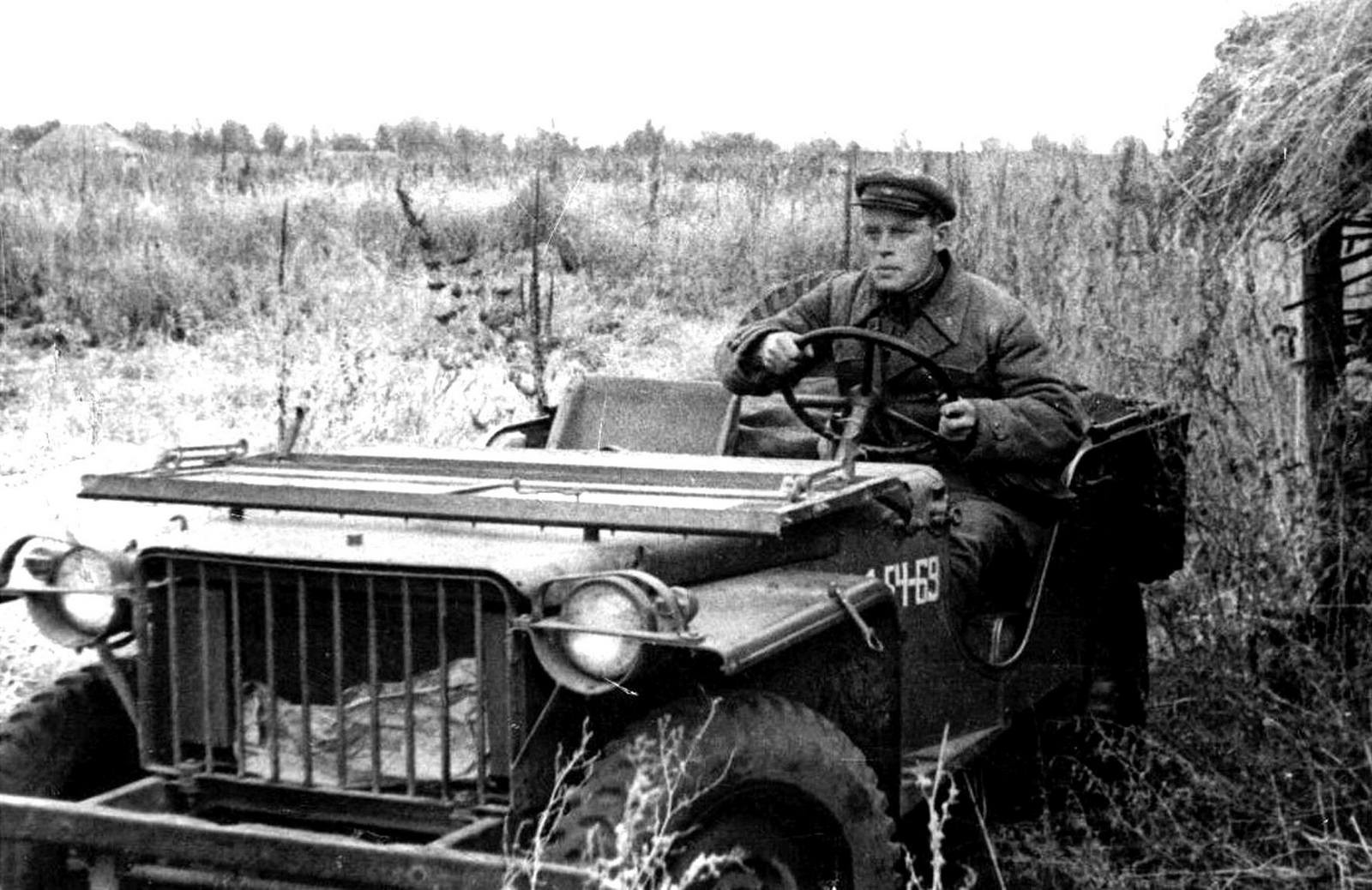
Поставки автомобилей Willys MB по ленд-лизу в Советский Союз начались весной 1942 года. Они поступали из США и Великобритании тремя морскими путями через северные, южные и дальневосточные порты.
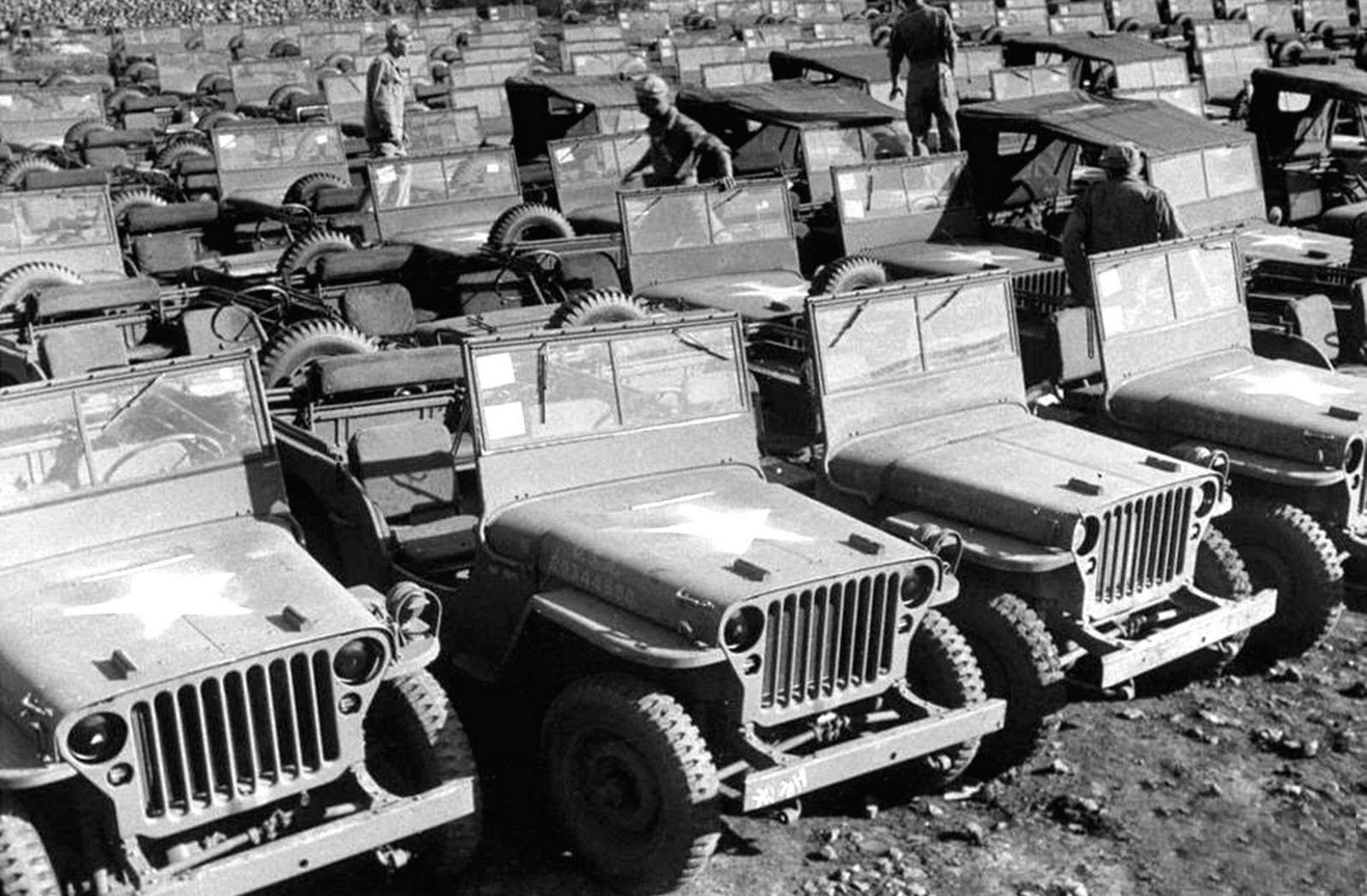
В основном их поставляли в собранном виде и реже в полностью разобранном состоянии в специальных деревянных ящиках, которые можно было укладывать друг на друга на палубе транспортных судов. Их сборка из машинокомплектов была налажена в иранском порту Бушир, на Московском заводе имени Сталина и на военных предприятиях в Коломне и Омске.
Фото 1. Джип Willys MB для охраны лидеров Тегеранской конференции (кадр из кинофильма «Тегеран-43»)
Фото 2. Президент США Франклин Рузвельт на Виллисе с главами делегаций Ялтинской конференции. Февраль 1945 года
Фото 3. Первая встреча советских и американских военных на конечном этапе Второй мировой. Апрель 1945 года
Фото 4. Та самая легендарная встреча на Эльбе с участием джипа Willys МВ и одного пулемёта. Май 1945 года
Выпуск автомобилей Willys МВ и Ford GPW завершился 20 и 15 августа 1945 года соответственно. По отечественным данным, в СССР по ленд-лизу поступило 39,8 тысячи джипов всех типов, по американским сведениям (без учёта потерь в пути) — свыше 49 тысяч. Теперь сравним:
в 1941–1945 годах Горьковский автозавод собрал около 14 тысяч командирских машин ГАЗ-64, ГАЗ-67 и бронеавтомобилей на их базе. Это, действительно, был достаточно высокий результат для одного предприятия, работавшего в условиях нехватки персонала, материалов и постоянных бомбёжек.
Фото 1. Генерал-полковник Владимир Судец на Виллисе в освобождённом Белграде. Октябрь 1944 года
Фото 2. Любимый советскими солдатами и офицерами лёгкий полноприводный автомобиль Ford GPW
Фото 3. Советские солдаты на американском джипе въезжают в освобождённую Софию. 1944 год
Фото 4. Колонна из джипов Willys МВ и полуторок в освобождённом Киеве. 1945 год
С точки зрения конструктора и шофёра
Легендарный Willys MB и его копия Ford GPW стали самыми распространёнными лёгкими автомобилями РККА. В большинстве они поступали в единственном универсальном исполнении с четырёхместным кузовом, брезентовым тентом и известной штампованной передней облицовкой с девятью вертикальными воздухозаборными прорезями и отверстиями для фар и подфарников.
С конструктивной точки зрения советские автомобили ГАЗ-64 и ГАЗ-67 вполне могли бы потягаться со своими заокеанскими аналогами. Моторы были схожими: что ГАЗ-64-6004, что L134 (по прозвищу Go Devil) – оба имели чугунные блок и головку, похожие карбюраторы и ГРМ с боковым расположением клапанов.
Реальная мощность отечественного мотора была 54 л.с., американского в лабораторных условиях возрастала до 60 л.с., во многом за счёт степени сжатия. У советского джипа она составляла 4,6, у американского — 6,5. Последнее неудивительно, так как ГАЗ проектировали под низкооктановое топливо.
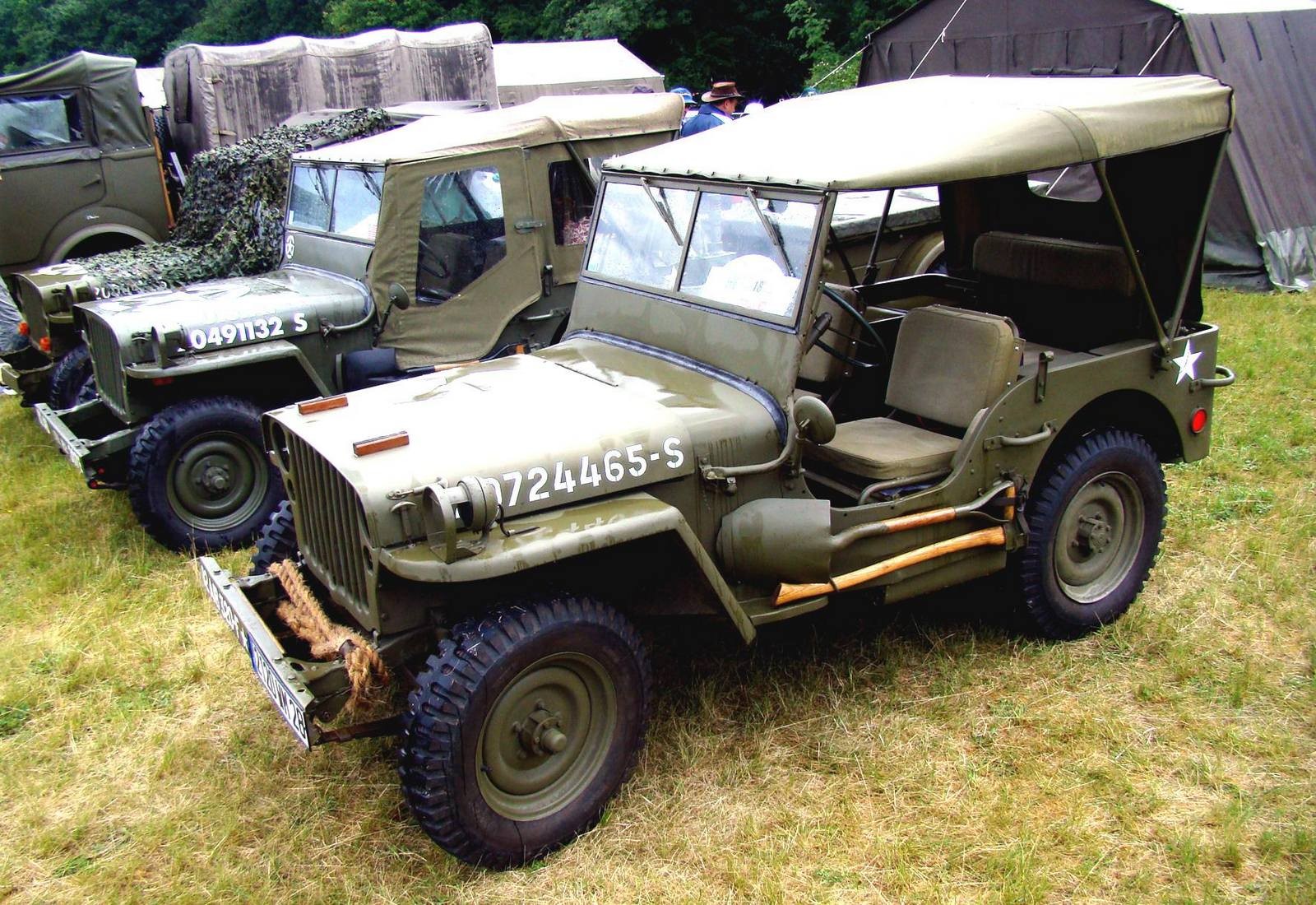
В отличие от модели ГАЗ-67, на Виллисе сохранился исходный размер колеи (1 230 против 1 446 мм), что привело к установке неудобного суженного кузова и снижению боковой устойчивости. По воспоминаниям ветерана В. А. Кригера, «главные недостатки американских машин заключались в их неустойчивости при кренах более 17 градусов, плохой проходимости по бездорожью, слабом электрооборудовании, высокой требовательности к качеству моторных топлив и масел».
Джипы Willys МВ в качестве лёгких артиллерийских тягачей. 1943 год
По классификации военного ведомства США Виллис относился к тактическим автомобилям с полезной нагрузкой в четверть тонны (250 килограммов). Его можно было приспособить под разнообразные военные нужды, установку специального оснащения и вооружения, буксировку прицепов и лёгких артиллерийских систем.
Виллисы Великой Отечественной с радиостанциями и вооружением
Фото 1. Аэродромный Willys MB для обеспечения радиосвязи в ходе Тегеранской конференции. 1943 год
Фото 2. Наиболее мощная мобильная радиостанция стран антигитлеровской коалиции на шасси Ford GPW
Фото 3. Открытый Willys MB с ручным противотанковым ружьём и боевым расчётом из четырёх человек
В разгар войны Виллисы, напичканные второстепенными мелочами, отправились в свободное плавание. Вопреки былым нормативам, их снаряжённая масса подскочила до 1 420 килограммов и вплотную подобралась к уровню нашего ГАЗа-67. Превосходство «американцев» по экономичности не превышало 2 литров бензина на 100 километров, по максимальной скорости — на 15 км/ч больше.
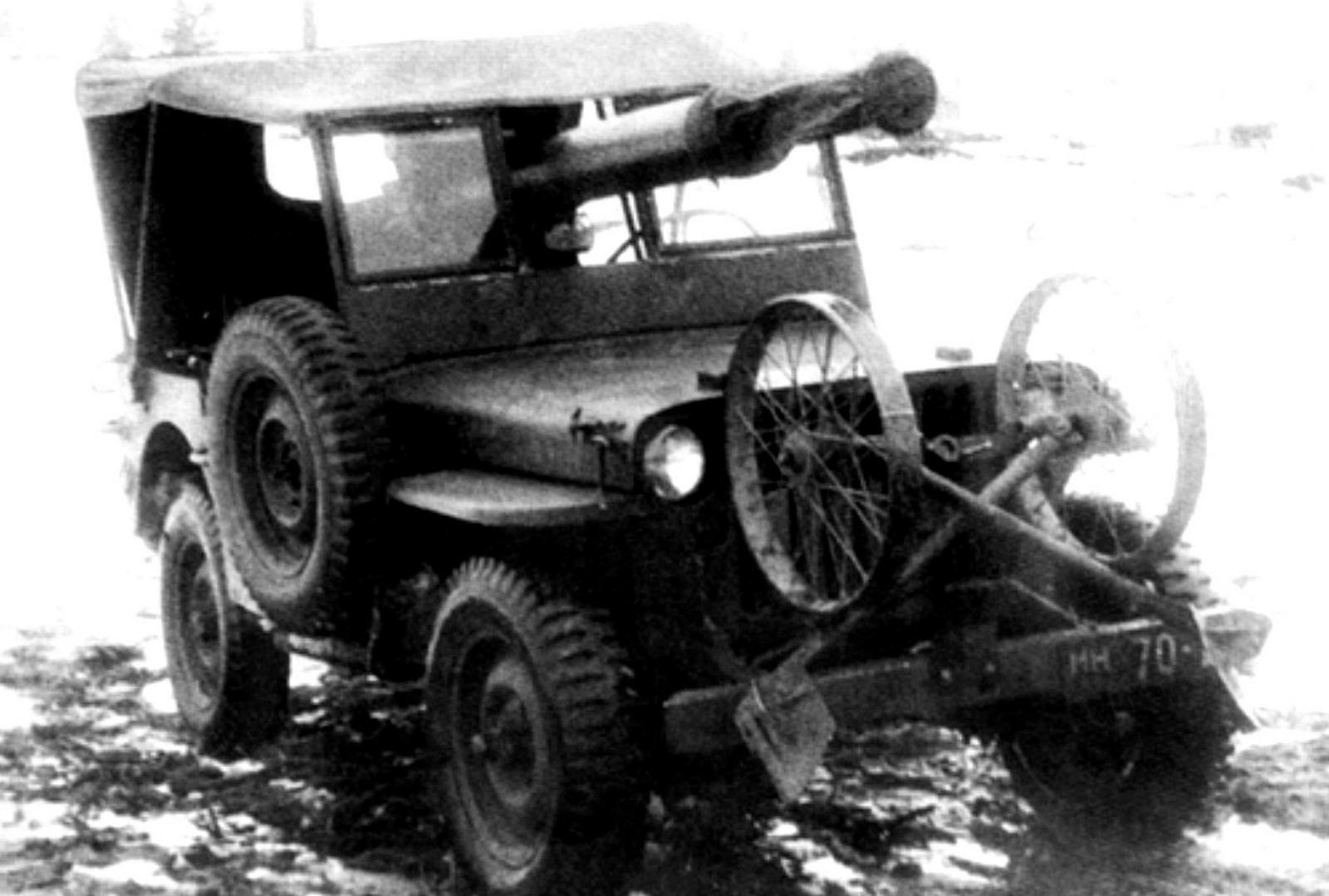
А что же думали о Виллисе простые шофёры? В отсутствие подобных советских машин они немедленно и безоговорочно признали его самым совершенным, мощным, экономичным и просто лучшим автомобилем Красной армии.
Чем же прославился виллис mb?
Willys МВ был универсальным, маневренным и практичным, но в целом рядовым лёгким армейским автомобилем с четырёхместным кузовом без дверей, брезентовым тентом и откидывавшейся на капот передней панелью с жёстко укреплённым в ней лобовым стеклом.
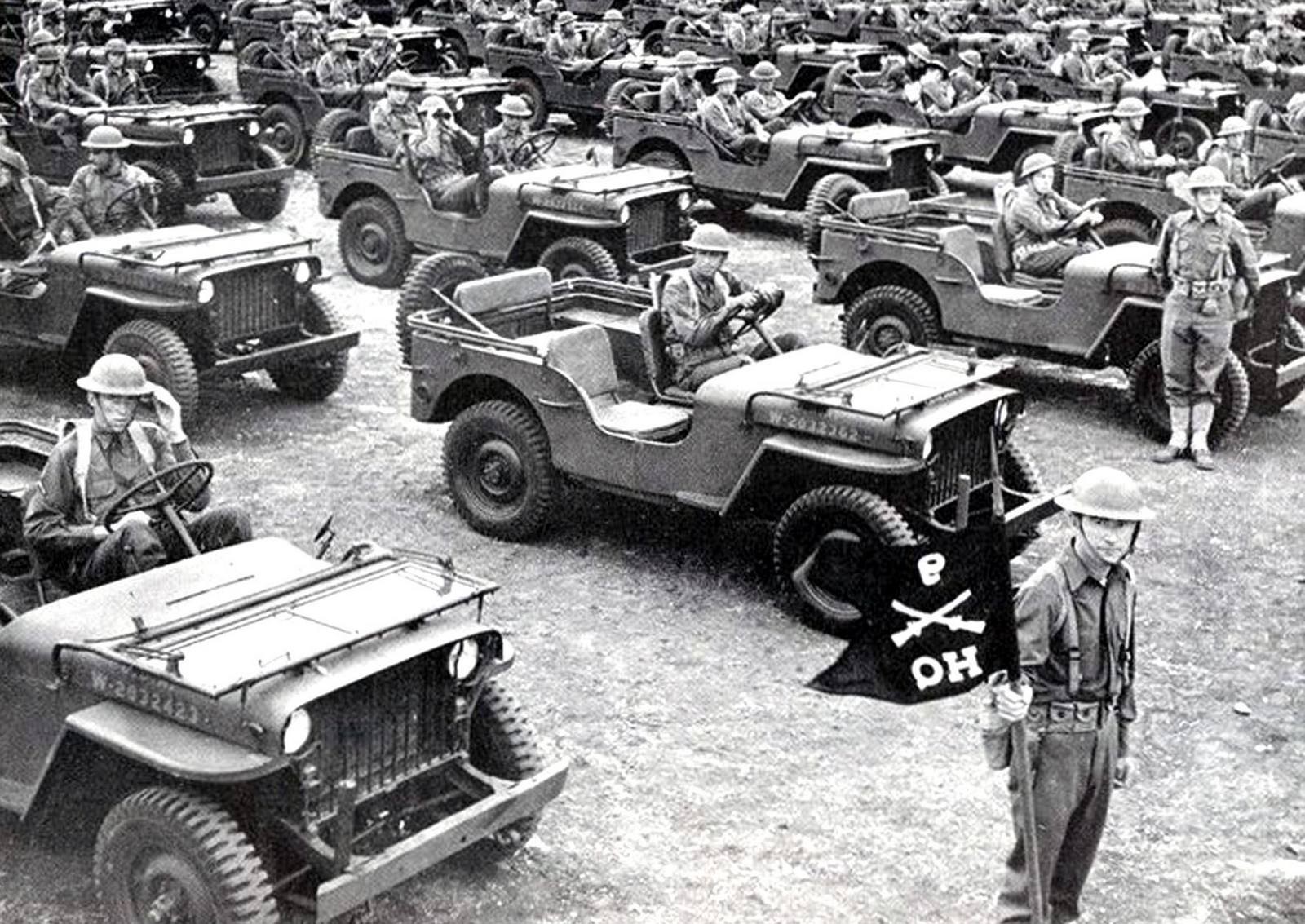
Внешне от предыдущего джипа Willys МА он отличался фарами, перенесёнными с крыльев в облицовку радиатора, и деталями кузова. Машины МВ первого выпуска снабжались отдельной лёгкой сварной решёткой радиатора и оригинальными откидывавшимися вверх фарами, облегчавшими замену лампочек, а также диагональным расположением задних фонарей от модели МА.
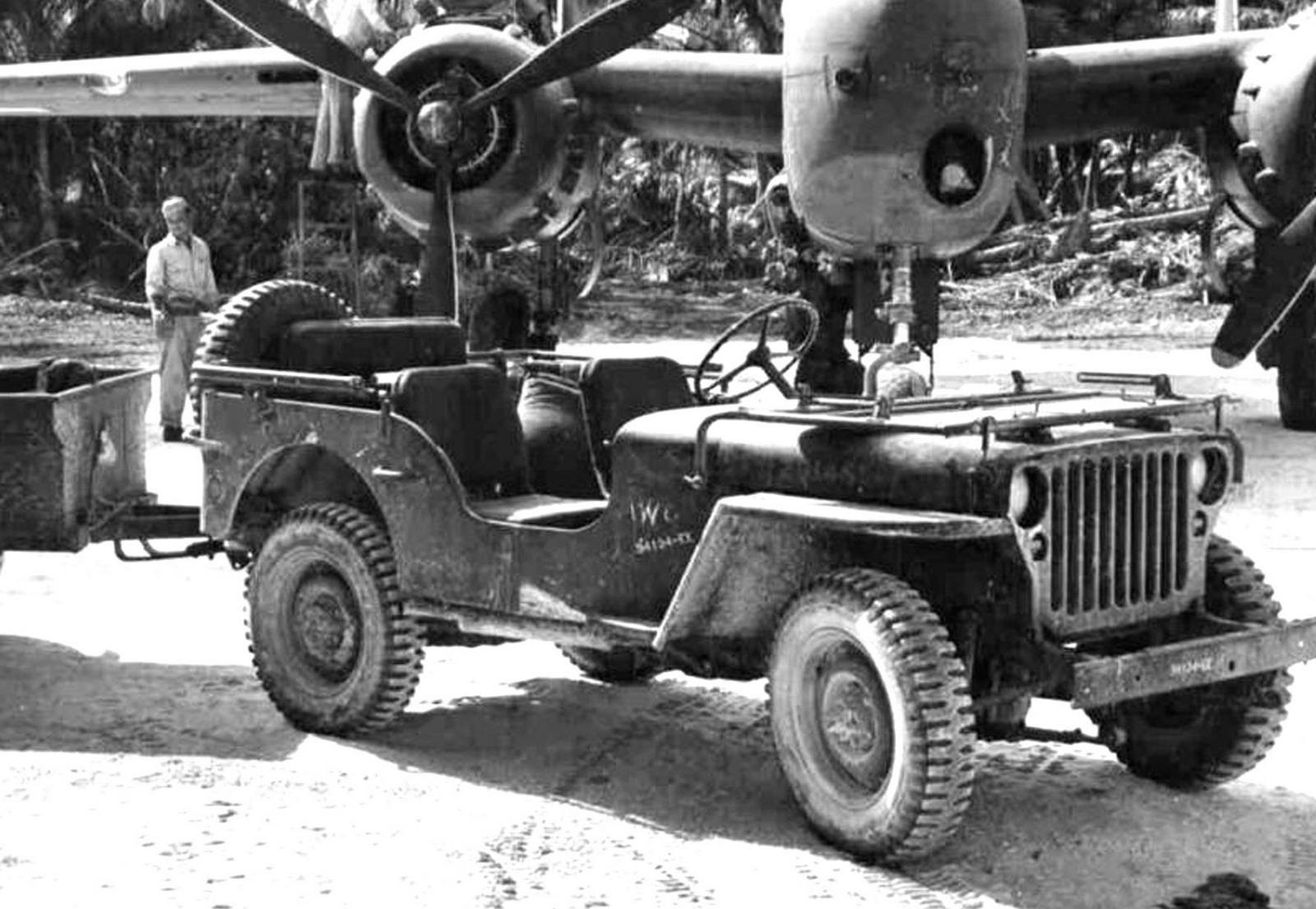
В середине 1942 года все машины Willys МВ получили хорошо известную внешность со штампованной решёткой радиатора. В техническом отношении автомобиль практически не отличался от своих предшественников Quad и Willys МА, получив отработанный двигатель Willys 442 прежней мощности (54 л.с., по стандарту SAE — 60 л.с.).
На нём монтировали трёхступенчатую коробку передач от легковой модели Overland, двухступенчатую раздаточную, рессорную подвеску, барабанные тормоза с гидроприводом, передний управляемый мост с шестью типами шарниров равных угловых скоростей и шины размером 6,00–16.
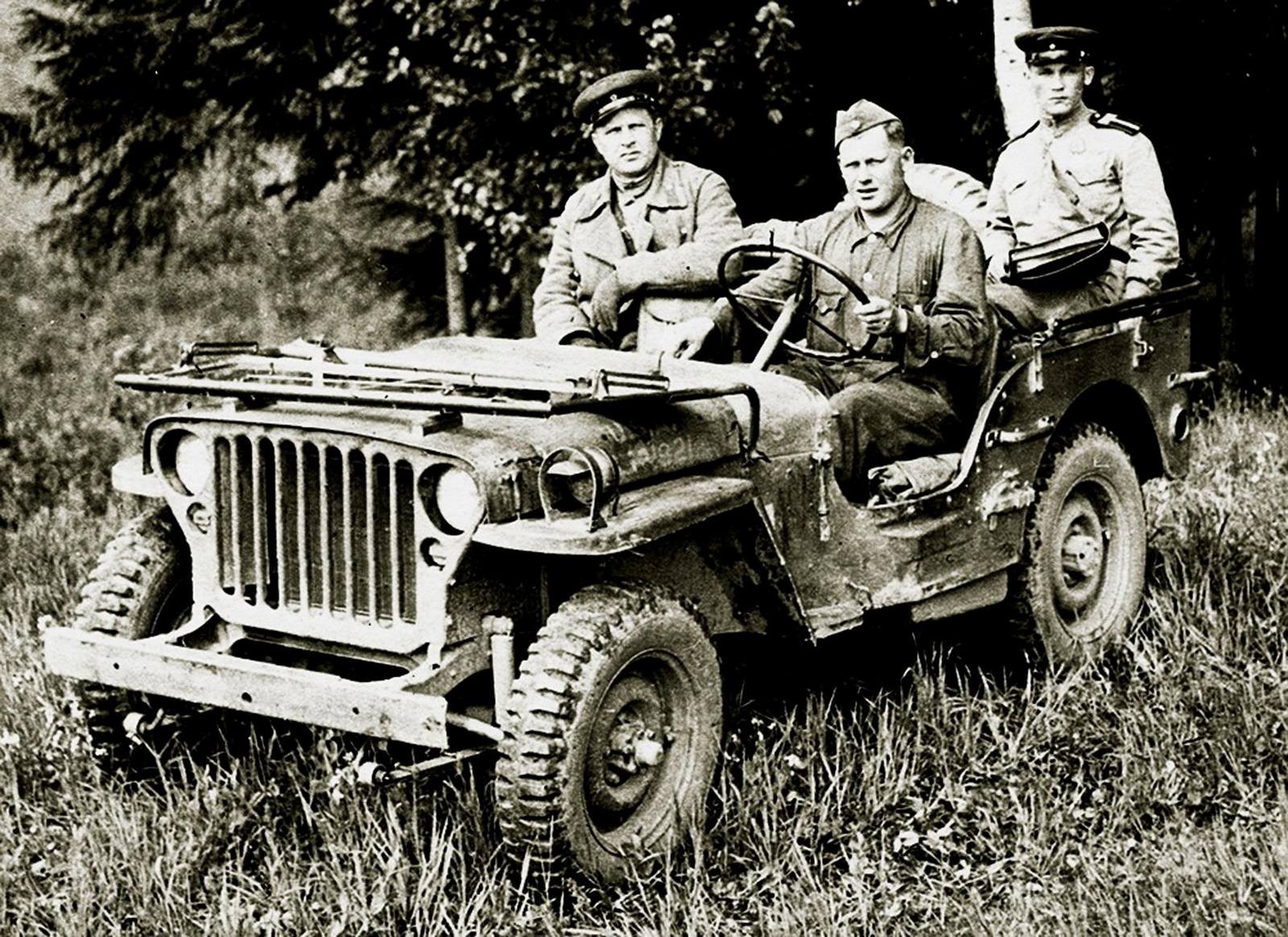
В процессе производства до июня 1944-го Willys МВ постоянно подвергался незначительным модификациям и снабжался разными наборами вспомогательного оснащения. Среди них были новые генераторы, аккумуляторные батареи и гидравлические амортизаторы, модернизированные тормоза и рулевая колонка, разные топливные баки ёмкостью от 38 до 57 литров.
Сохранившиеся до сих пор армейские автомобили Willys MВ
Фото 1. Ранний вариант автомобиля Willys MB со сварной решёткой радиатора
Фото 2. Типовой вариант джипа с лёгким тентом и шанцевым инструментом
Фото 3. Джип с застеклёнными брезентовыми боковинами кузова и прицепом М-100
Фото 4. Переделанный игровой Виллис MB из коллекции киностудии Мосфильм
Колёсная база джипа Willys МВ не изменилась (2 032 мм), дорожный просвет составил 222 мм. Максимальная скорость — 105 км/ч, средний расход топлива — 11–12 литров на 100 км.
Читать новости о новой Ниве
 ТЮНИНГ БМ 200
 УСТАНОВКА РАСПРЕДВАЛА ОТ НИВЫ НА КЛАССИКУ
 Методы позволяющие проверить её даже без компрессометра
 Снятие и установка промежуточного вала Niva Chevrolet
 Обновите свой ВАЗ новым радиатором: выполните следующие простые шаги по установке
 Повысьте свой успех с помощью методов расшатывания Oase и Nivu
 Ускорьте свой двигатель xud9: советы экспертов для оптимальной эффективности
 Уаз болотоход: цена, на базе, своими руками, технические характеристики — Спецтехника Инфо